
Sell First or Move First? How to Choose the Right Transition Strategy for Seniors ?
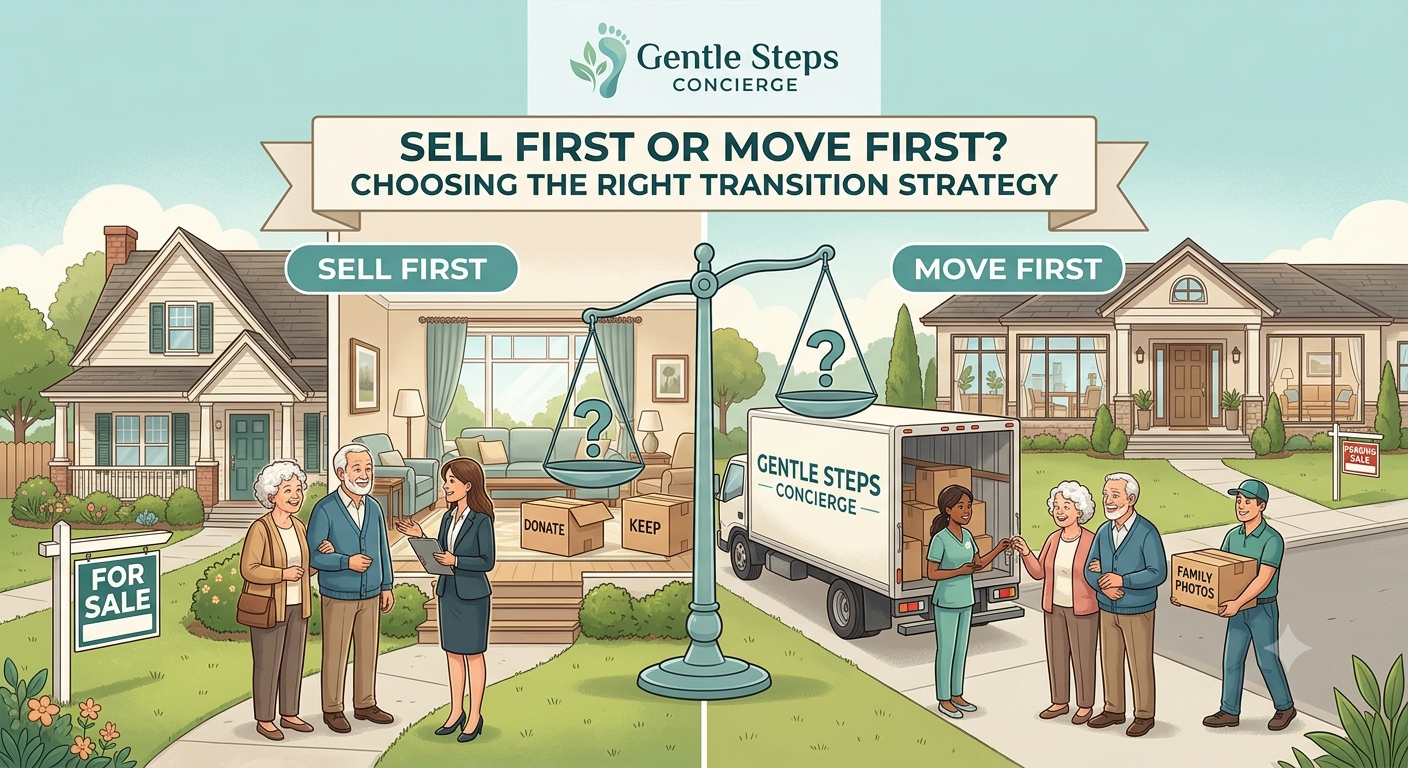
Deciding to downsize or transition into an assisted living community is a major milestone—not just emotionally, but logistically. Once you’ve made the decision to take this step, one of the very first financial and practical questions that arises is: Should we sell the current home first, or move into the new space first?
There is no one-size-fits-all answer. Every situation involves balancing financial flexibility, physical comfort, emotional strain, and timing.
To help you and your family make the best choice, let’s break down the pros, cons, and key considerations of both strategies.
Strategy 1: Sell First, Then Move
In this scenario, you list, market, and sell the family home before moving into your new residence or senior living community.
The Benefits
Clear Financial Picture: You know exactly how much liquid capital you have from the sale before signing agreements or setting budgets for your next step.
No Double Housing Costs: You avoid paying a mortgage, property taxes, utilities, or community fees on two properties simultaneously.
The Challenges
Living Through Showings: Staging, keeping the house perpetually spotless, and leaving the property on short notice for buyer walkthroughs can be physically exhausting and disruptive.
Tight Timelines: Once a buyer is found, you may feel rushed to sort through a lifetime of belongings, organize an estate sale, and clear out the home before the closing date.
Best For: Homeowners who require the proceeds of the home sale to fund their next step, or those who prefer financial certainty above all else.
Strategy 2: Move First, Then Sell
With this approach, you secure your new home or suite in an assisted living facility, complete the move, and then prepare and list the vacant home on the real estate market.
The Benefits
A Gentler, Stress-Free Transition: You can move at a comfortable pace without living in a home filled with packing boxes or accommodating sudden buyer walkthroughs.
Faster Home Preparation: An empty home is often much easier for contractors to repair, paint, deep-clean, and stage, which can lead to higher offers and a quicker sale.
Familiarity First: Seniors can get settled into their new environment and routine right away, minimizing the period of uncertainty.
The Challenges
Carrying Costs: You will temporarily be paying for two spaces (e.g., home upkeep and senior living fees) until the property closes.
Upfront Coordination: Managing repairs, estate sales, and cleanouts on a vacant home from a distance requires strong project management.
Best For: Families with the financial bridge to handle short-term dual costs, or those prioritizing physical comfort, minimal disruption, and peace of mind.
Key Questions to Help You Decide
When evaluating these options with your family, ask yourselves:
What is the current health and energy level of the homeowner? If living through home showings and open houses will cause significant physical strain or anxiety, moving first is often the more compassionate route.
Do we need the home’s equity immediately? Consult with your financial adviser or wealth manager to see if bridge options or existing savings allow for moving prior to sale.
How much preparation does the home need? If the home requires minor repairs, decluttering, or staging to fetch top market value, doing so after the move is far less intrusive.
You Don't Have to Navigate the Logistics Alone
Whether you choose to sell first or move first, executing either strategy involves a dozen moving parts—from estate sale planners and senior move managers to repair contractors and real estate paperwork.
Planning a transition for yourself or a loved one? Contact Gentle Steps Concierge today to discuss a customized plan for your move.
